
News
Flemish independentists come first in Flanders and Belgium
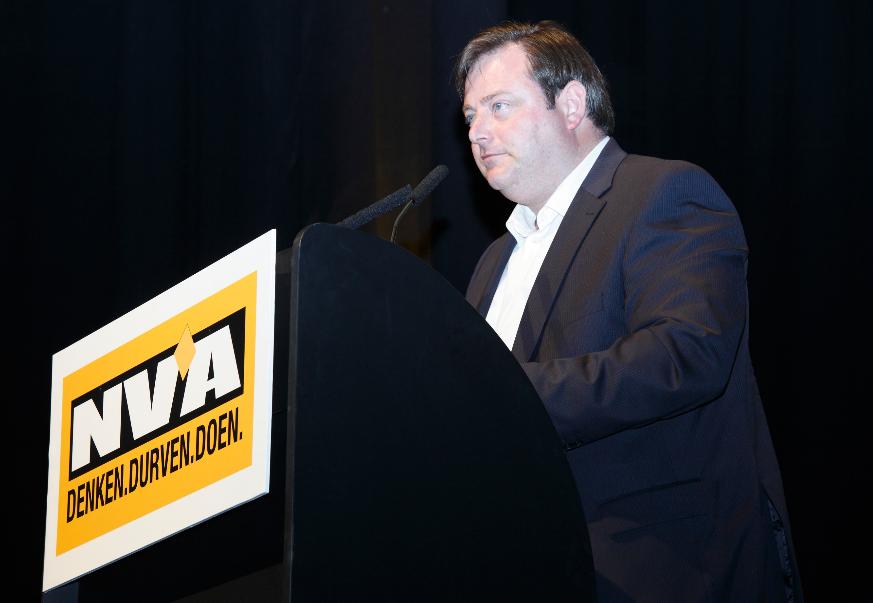
The Belgian state is approaching a deep and perhaps its final reform after the New Flemish Alliance (N-VA) -center-right pro-sovereignty party- came first in Flanders and Belgium in Sunday's federal elections. N-VA managed to secure 27 seats.
In the whole of Belgium, the second most voted party was the Francophone Socialist Party, with a share of 37% of the Walloon votes. It returned 26 seats to Parliament and it is expected to enter a coalition government with N-VA. As regards the rest of parties, the Flemish Christian democrats (CD&V), which run the 2007 elections together with N-VA, saw their support decrease, and dropped to 17 seats instead of 30. Wallonia's second party was the Reformist Movement (MR), which secured 18 seats and lost the leadership in Walloon politics.
The N-VA is not the only pro-independence political party in Flanders. There is also the far-right Vlaams Belang (VB, Flemish Interest), which got 12 seats (5 less than those obtained in 2007) and the DeDecker List, which lost 4 seats obtaining only 1. Pro-independence parties together add up to more than 40% of the share in Flanders. It is worth mentioning that the far-right Vlamms Belang has been ousted as pro-independence champions as a result of N-VA‘s historic results.
A state reform prevails
Bart de Wever's N-VA supports a Belgian confederation as a previous step for a full independent Flanders. The confederation would transfer all powers to both Flanders and Wallonia except for defense and the monarchy. Elio di Rupo, the Walloon socialist leader, said that the Flemish people "have sent out a strong signal: a large share of the people wants institutional reform to stabilise the country"; he also assured the message had been "heard and understood". It is likely that di Rupo himself takes charge of the post of first minister, as the socialist group -Walloons of the PS and Flemish of the SP-A- is the largest one in Parliament. The N-VA has no counterparts in the Francophone area and so cannot be a consensus candidate. However, it will probably become part of the coalition government supervising the cabinet policies.
Further information:
- RTBF: Elio Di Rupo et Bart De Wever attendus chez le Roi
- Le Soir: Di Rupo vainqueur des voix de préférence à la Chambre
- De Standaard: Koning Albert begint consultatieronde
- Flandersnews.be: N-VA wins General Election